• Skip to main content
  • Skip to primary sidebar

State of Anxiety

Providing humorous perspective during & after a breakup or divorce

  • FREE Community
  • About
  • Books
  • Contact

Jon Patrick

14 Ways to Heal After a Rough Breakup (#4: Resist the urge for sex with the ex)

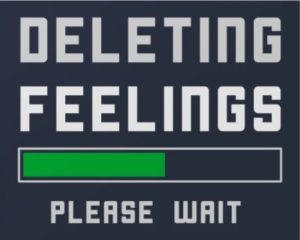
Image of a system deleting feelings.Why do breakups have to hurt so badly? If we all ran amok and naked—cuddled with those we liked with no consequences, like an episode of Bachelor in Paradise—the world would spin off its axis. There must be some societal checks and balances.

Evolutionary biologists conclude that post-breakup pain and reflection are required for us to learn from loss. In other words, the agony following a breakup is an evolutionary adaptation that ensures the maintenance of close social ties.1

Understanding the pain of rejection

Rejection hurts so that we are hesitant to enter social situations in which rejection is likely. Think of it as a safety mechanism to protect us from our own wanton desires.

Develop some empathy and realistic expectations for your breakup recovery. Unchecked emotions can lead to despondency and a sense of hopelessness. Feelings of self-blame and even thoughts of self-harm or suicide are not uncommon. So it’s vital to consider professional help. Every person and split is different. We may have handled a prior breakup just fine, while the next one has us clutching our chest and making deals with God.

Breakup and divorce recovery were less grueling when the world was offline. Before social media, breaking up was a discrete event. A split used to occur when phones were dumb and tethered to a wall. Imagine a time when you answered every call, hoping it was your ex calling, but it was Aunt Edna asking if you wanted ambrosia salad for Sunday brunch.

Now more than ever, we have commoditized ourselves and have made dating transactional. 

Today, a breakup can go down via text sans any emotion or actual interaction. Even worse, they can take the form of a social media post, thereby becoming a spectator affair rife with the trimmings of public comments, crying emojis, and indiscriminate shares, all forever memorialized in the cloud.

For some modern-day breakup sufferers, the outing of their emotions so publicly online is a frantic form of catharsis. They post colorful block quotes of how freshly independent they are while deluging us with selfies donning new clothes, bangs, spray tans, sports cars, or posing with any attractive being of the opposite sex, or worse—a flexing gym selfie.

How to heal your heart

What can you do when someone takes your relationship back to the previous level? The following are techniques to greatly accelerate your rise from cupid’s neglect:

  1. Social media is neither social nor media. If you post over-the-top or sexy pictures as evidence of your thrilling new life, you are only showing how much you still care. Breaking up with someone includes breaking up with his or her social media. If you skip this fundamental step, you might as well slip on camouflage, squat in the bushes, and ogle them through their windows.
  2. Alcohol gives you a bummer brain. Alcohol is a depressant that impairs judgment. One does not need a root causal analysis to see the results that sad drinking can yield. Alcohol whispers silly things like, “You should totally text him.” Any amount you drink can make you more miserable. It also leads to bad decisions, like eating cereal for dinner, and impulsivity, like buying something from Tiffany’s website or your local Lexus dealership.
  3. Do nothing. Any moment that you want to reach out or take an action that has anything to do with your ex—especially if it’s trying to get them back—do nothing. Doing nothing ensures that you have nothing to regret. You can’t go wrong if you avoid any action that gets you reengaged with your ex. It’s the smallest tactic with the biggest return. Your panic and desperation to get them back in your life is a crushing desire that lessens each time you don’t try.
  4. No ex-sex. There are endless reasons why sexual reunions with your ex are inadvisable. Go on a “love fast” for 30 days to begin dissolving the neurological processes your brain has formed. In a study published in Archives of Sexual Behavior, researchers found that people who use sex to cope with breakup anger and distress or to get back at their ex may be slower to recover from the breakup.
  5. Be “opposite” you. In the case of a breakup or divorce, the primary “opposite you” is to ‘go ghost.’ If you and your ex have children together, then you will unavoidably need to discuss issues such as welfare and access. However, it is best to keep these interactions to a minimum and at a McDonald’s Playland just off the freeway. Otherwise, continuing to see your ex prevents you from moving on with your life. It also exposes you to extreme distress and hinders your emotional recovery, leading to an increased longing for reconciliation.
  6. Never use one person to get over another. Rebound relationships are a great way to boost your ego at the expense of someone else’s well-being. Rebound dating is not. If you are hurting, you should be healing, not dating. Reconnect with old friends. They’ll remind you of how epic you were prior to your ex falling from the internet into your arms. A rebound simply postpones healing in a cerebral purgatory.
  7. Radically accept. When faced with a breakup, rather than focusing on how much you want things to be different, try radically accepting the situation as is. Radical acceptance is not the same as liking or condoning. It’s simply accepting what is out of your control to lessen your anxiety, anger, and sorrow. Controlling your reaction to what is happening is the only thing over which you have control. In life, you can let go, or you can be dragged down.
  8. Be DTF (Down-to-Forgive). Practice some breakup dementia. You’ve been forgiven in life, so pay it forward. And if you believe you were at fault, forgive yourself not just once but again and again until you feel peace. Once you accept your flaws and mistakes, no one can use them against you. The truth is, most of us are doing the best we can with the skills we have at any given moment.
  9. Soothe thyself. The goal of breakup self-soothing is to engage as many of the five senses as possible. Consider taking a hike by water or in nature while paying close attention to the sights, smells, and sounds around you. Or get a massage somewhere that’s not open 24 hours with blacked-out windows. Go out for a meal or just dessert with a friend, if possible. Even when you don’t feel like eating, food goes down much easier under the distraction of conversation.
  10. Send a knee-mail. I don’t care if you are Muslim, Hindu, Christian, Jewish, or wondering if there’s a God—negotiating a breakup is the perfect time to spend in prayer. Every moment that you are centered in the past or future, you suffer a temporary loss of this life. Prayer keeps you rooted in the now. Add mindfulness meditation training via a meditation phone app or YouTube. With practice, an inner balance and peacefulness develop, and you become a master of chill.
  11. Do some comeback cardio. Any type of exercise or vigorous activity is an effective means to burn off the breakup flotsam in your bloodstream. Exercise will cause your muscles to create lactic acid to help counter the change in pH resulting from anxious breathing. Don’t overdo it. If you weren’t an American Ninja Warrior contestant prior to the split, you don’t need to be one now. But you do need to spend time outdoors, get regular sleep, eat right, and move.
  12. Designate a BuB (Breakup Buddy). The breakup recovery process is fraught with pitfalls and regression. It’s counterintuitive to feel worse while supposedly on the track to healing. One minute might pass where you don’t think of your ex at all. The next, you’re chewing off your bestie’s arm to retrieve your phone and send an ill-advised text. These are dangerous moments of relapse, hence the importance of a “breakup buddy” (aka BuB). Choose someone empathetic and able to handle the mood swings and random lunacy you will fire at them.
  13. Take the write way. “Dear Diary, Today everything sucked….” Research has shown that breakup journaling helps reduce stress, solve problems more effectively, and even improve your health by strengthening immune cells called T-lymphocytes. Eventually, you will start to see that you’re a damned rainbow, and your ex was colorblind.
  14. Don’t get kicked in the nostalgias. Nostalgia has a utopian aspect due to the substantial role that imagination plays in it. When reminiscing about a previous romantic love, your past difficulties are often overlooked due to the idealization of your ex and the time you spent together. The image in your head that the past looks so perfect is a mirage created by nostalgia. The past holds nothing for you now. Stop looking there.

Yeah, breakups are sad. But have you ever accidentally stepped on your dog’s paw?

References

Rhoades GK, Kamp Dush CM, Atkins DC, Stanley SM, Markman HJ. Breaking up is hard to do: the impact of unmarried relationship dissolution on mental health and life satisfaction. J Fam Psychol. 2011 Jun;25(3):366-74.

What “Relationship OCD” Looks Like … and 6 steps to better manage it.

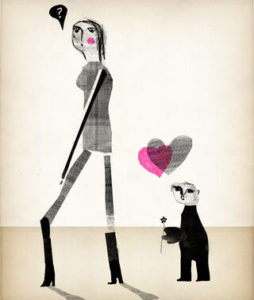
Cartoon image of tiny male with rose wooing an extremely tall woman with her back turned on him.

Credit: Andrea D’aquino / flickr

The power of the human mind is wonderful and boggling—except when it turns on you, peppering your psyche with staccato queries about your relationship.

One minute, your partner’s grandeur is so intense, it’s cartoonish. How did you ever land such a splendid fish? The next minute, you’re spun into a vortex of doubt, placing them under intense analysis and scrutinizing every nuance of the relationship, including their questionably thick eyebrows.

This barrage of errant thoughts and questions commonly arises in otherwise healthy relationships. The obsessions include judgments around a mate’s imperfections as a person and partner, or about the rightness of the relationship itself:


  1. Why can’t he ever trim his ear hair?
  2. Does her nose have to whistle whenever she chews?
  3. I just saw a hot guy at Starbucks—am I in the wrong relationship?
  4. Are they even smart enough for me?
  5. Why aren’t we schmoopy like other couples?
  6. There are times I’d rather look at Instagram than have sex with him.
  7. Why don’t I miss her even though I’ve been at Coachella for three days?

This form of anxiety that comes with liking someone is common enough that I think it warrants its own name: “relationship obsessive-compulsive disorder (ROCD).” (Note: This is not an official diagnosis or clinical term.) The seemingly sublime onset of ROCD has led to many brain-worm Taylor Swift songs and vodka tonics, while pondering if you’re with the right person. You may avoid taking the next step in your bond because you can’t get past their perceived flaws, or you might even sever the connection altogether. You met them on a free dating app, after all.

Me: “I am happily in love with my girlfriend.”
My ROCD: “Actually…”

With ROCD, the sufferer experiences intrusive, unwanted, and distressing thoughts about the strength, quality, and nature of their love for their partner. As with other forms of OCD, the fixations in ROCD focus on issues of doubt and an intense discomfort with uncertainty. But hearing a breakup song on the radio is not a sign to end your relationship.

These obsessions often include responding with compulsions intended to lessen the distress caused by unwanted thoughts. The urges take forms such as regularly asking friends or family if you’ve made the right choice of partner, comparing your relationship to a previous more exciting (if often unhealthy) relationship, Internet searches about “the one,” finding that sex is a chore, or eating a sandwich during sex.

How Does “ROCD” Arise?

You position your companion against idealistic depictions of “real” love from episodes of “The Bachelor,” royal weddings, or the seething sexual chemistry in KY personal lubricant commercials. This is exacerbated by dating apps, which have created an atmosphere of seemingly endless options, short-attention-span dating, and The BBD (bigger, better, deal). We have commoditized ourselves, and dating has become transactional. It’s no wonder that our anxiety surrounding relationships, commitment, and marriage has shot up, while the principles of love and marriage run askew.

Add to this the notion of “soulmates,” which further ups the relationship anxiety ante. There’s a fantasy that guides many into seeking idyllic partners or soulmates. If you could find that perfect match, you’ll be guaranteed a lifetime of relationship bliss, right? Nope.

Research by Aurora University psychologist Renae Franiuk, who studies people’s beliefs about their intimate partnerships, called Implicit Theories of Relationships, finds that “People who believe in soul mates may be setting themselves up for a lifetime of heartache and failed relationships.” In this relationship model, you constantly measure dating partners against your idealized image of the man or woman who will be the one true love of your life.1

Everyone Else Seems Better, Until You Get to Know Them

There is a persistent idea that when we choose someone to be a long-term partner, they will be an incredible lover, and you will hold fireside chats about Tolstoy and take long beach saunters while sharing flaxseed smoothies. OCD demands there be no doubt in a person’s mind whether they have chosen the right person. For the ROCD sufferer, the obsession is, “I must know unequivocally that my partner is the absolute one for me.” This belief is steeped in anxiety. The anxiety, in turn, compels the person to engage in compulsive behaviors in a vain attempt to arrive at certainty.

How to Counter “Relationship OCD”

The goal is to reduce ROCD symptoms enough to reach an informed decision regarding your relationship. Consider utilizing the following skills:

    1. Let go or be dragged. Radically accept that there is no way to know with certainty whether any relationship will work out for the long haul. If they make you happy, and you share similar values and goals, then Yahtzee! But we all have flaws, and the only perfect relationship is the one between puppies and babies.


    1. Remember that thoughts and feelings do not equal facts. All OCD is rooted in irrational fears that lie to you with baseless obsessions, rituals, and ruminations. You can’t always control your thoughts; it’s what you do with the thoughts that matters. Just because you think it or feel it doesn’t mean it’s true. Often, when you feel hungry, you’re actually just thirsty.


    1. Stop the comparisons. Comparison is the fastest route to misery. Check in with yourself whenever you start ruminating about the relationship. This includes comparing your real relationship with those nauseating social media versions that you can “thumbs-up” later when they break up. Attraction and arousal wax and wane. Expecting yourself to always find your partner attractive or to always be interested in sex is setting yourself up for discontent. Remember “Brangelina”?


    1. Realize that risk is scary, but regret is scarier. Be willing to sit with the anxiety caused by the thought that you may not be committing to the “right” person. To live life fully, one must take risks, or face regrets. Seeking assurances is a compulsion that increases OCD thinking patterns. #YDOLO: You don’t only love once.


    1. Give yourself the present of presence. Mindfulness is a skill that is practiced and perfected little by little… like using chopsticks to eat salad. Practice mindfulness within your relationship. Observe thoughts of relationship doubt as they drift through the mind. The intention is not to get involved with the thoughts or judge them, but simply to be aware of each mental note as it arises. With practice, an inner peace develops, and you’ll brandish relational chill at will.


  1. Get a little help. Notice your past relationships. How often have similar doubts shown up in your life? If a pattern exists, don’t break off the relationship until you have practiced the preceding or consulted with a professional therapist. Like other OCD symptoms, ROCD symptoms require psychological intervention if they are causing significant distress. ROCD is more than the relentless pursuit of relationship excellence.

Yes, there are plenty of fish in the sea. But they might be your fish.

References

Franiuk, R., Cohen, D., & Pomerantz, E. M. (2002). Implicit theories of relationships: Implications for relationship satisfaction and longevity. Personal Relationships, 9(4), 345-367.

“Manxiety”: The Lesser-Known Anxiety Gender. “Man-upping” is not and never will be a coping strategy. Here’s what is.

Cartoon version of man sitting in a yoga pose on top of his desk.

Creator: Vect0r0vich
Credit: Getty Images/iStockphoto

Despite driving a pickup and owning steel-toed boots, I’m not a “man’s man.” I don’t look or sound tough, and I feel awkward at Home Depot. I own a gun, but it’s for caulking showers. My life is a dichotomy in that I’ve spent years in Taekwondo and I love football and rodeos, but I also have an affinity for frozen yogurt and watching HBO with pinot noir and nutmeg candles next to my cats, Thelma and Louise. I attribute my temperament to genes and California hippy tap water.

Male anxiety – hereby called “manxiety” – can be clinically contagious if you’re around it long enough. My dad, a manly victim of indecisiveness, often had me second-guessing my own life choices, or not making one at all. To this day, I’m paralyzed by an Applebee’s menu or a yellow traffic light.

Men are stalwarts of resolve with an uncanny ability to chug beer, char meat, and kill one another. Men recognize that our cars and lawnmowers need tune-ups and diagnostic tests, but we rarely wash our feet in the shower, let alone visit a physician for check-ups—especially for anything regarding the brain. And when we don’t prioritize our own well-being, neither do others.

If you’re a man with anxiety, however, the norms become skewed and irrational.

I grew up a hypochondriac, certain that every pain, rash, bump, or twitch was something malignant or terminal. I visited the hospital countless times a year while spending an enormous amount on annual copays. What I thought was testicular cancer was an inguinal hernia from doing deadlifts. What I feared was Lyme disease was an allergic reaction to grass. And what I accepted as a heart attack turned out to be…anxiety.

Only twice did I not go to a hospital when I should have. The first was at 18 while suffering intense chest pain and labored breathing because I had unknowingly collapsed a lung. In my defense, I thought it was heartburn. The second was when I intermittently peed blood over a 10-month stint. A rational man would interpret hematuria as the ultimate motivation for a hospital visit. But the only thing worse than my fear of potential hospice was the anxiety of a pending cystoscopy.

So I settled on platinum-level denial until I landed in surgery and chemo. Ignorance is a prickly muse. With chronic male anxiety, it’s torturous to determine what warrants an ER visit versus antacids. And when it came to my mental health, I handled it like most men: denial, distraction, and drugs. In that order.

Most men with anxiety have no idea what’s wrong with them. Like Bill Bixby in “The Hulk,” they just feel angry. Denial and distraction are why so many men walk around as functioning alcoholics or addicts. In the absence of knowing any better, or a willingness to seek help for male anxiety, we plug the holes however we can. But if you treated any other disorder by ignoring or avoiding it, the outcome would be similarly grim. You can ignore asthma and diabetes for a while, too. But every disorder has its dues.

Since anxiety, depression, and other disorders of the mind are still largely stigmatized among men, our first coping tactic is typically denial, lest we appear weak and vulnerable among our peers. “Denial is a common coping strategy among men,” says Tom McDonagh, a California-based clinical psychologist. “Often when working with male clients, I’ll ask them about their physical ailments first, such as exhaustion or muscle tension, as an entry point to discuss emotions. I’ve found that if I ask about their emotions first I’ll receive a denial-type answer, such as ‘fine’ even though they are in a therapy session!” There’s no “I” in denial.

There’s an unwritten rule that men must be strong and in control at all times. This makes anxiety difficult to identify in men, even at high levels. This is troublesome as depression and anxiety in men are more likely to manifest in substance abuse and suicidal behavior. “What compounds the issue of denial in men is how they choose to cope when denial stops working. It’s not unusual for alcohol or drug use to be the next step. Research shows that \men are more likely than women to engage in illicit drug use,” McDonagh says.

How Anxiety Presents in Men

I’m a kind and empathetic guy, but anxiety makes me exceptionally irritable. If I’m forced to socially interact or deal with a rude stranger, I become a Chupacabra with the flashpoint of Aqua Net. I expend great effort trying to determine when I’m feeling anxious before it defaults to a felony persona. But distinguishing between anxiety and petulance requires Maharajah-level introspection.

“For some men, anxiety will present as chest pain or general discomfort. So they will see their general practitioner or cardiologist first. When they’re told the symptoms are a result of anxiety it can be embarrassing. There is a societal message that these types of mental health symptoms indicate weakness and incapability,” McDonagh says. “It’s not unusual for a male client to tell me ‘Look, I know I’m supposed to say it’s OK to feel this way. But I really don’t feel or believe that.'”

Men are conditioned to “man up” and be tough. It’s hard for men to discuss their vulnerabilities with anyone else. If guys simply ignore their feelings of angst, they could pretend anxiety doesn’t exist. But denial wasn’t designed to, nor intended to, work long-term. Distraction is an effective but equally short-term, noncurative technique for countering stress or discomfort, in that it avoids addressing the core issue.

In my case, I wielded distraction like artillery over my physical well-being. I over-trained in the gym, over-ran the trails, and over-swam in the lap pool. But I also over-imbibed alcohol. Drinking to distract is a futile endeavor. I would later harm-reduce to cannabis edibles, tinctures, and vapes. And on a few occasions, I overdid those too. Overdosing on sativa edibles leads to a nauseous, frenzied panic that is ruefully memorable.

How Chronic Anxiety Differs for Men

Although anxiety is an equal opportunist, the triggers for men and women appear to be different. A study examining fraternal twins showed that women are more affected by interpersonal relationships, while men were more sensitive to external factors, such as their careers.1

“In my clinical experience, women tend to have more acceptance around their anxiety. This often makes the treatment portion more successful. With some men, half the battle is working through the perception they have of themselves. For men to acknowledge they’re not always able to handle everything can be a shock to the ego,” McDonagh says. Male egos and bananas bruise easily.

Men Don’t Need a Panic Room. They Need a Panic Plan.

Men are fixers. We often try to fix things and people that aren’t broke. There are simple and clinically effective things men can do to lower their anxiety and avoid all of the preceding:

  1. Find a licensed professional with whom you can connect. This is the most helpful tactic. You can start by asking your primary care provider for a reference. “A professional can help with the three building blocks of anxiety treatment: education, skill building, and implementation. Once these blocks are established, male clients are much better equipped to handle anxiety,” McDonagh says. But many men will still draw up plans, build a ship, and invade Tripoli before calling a therapist.
  2. Focus on healthy, routine sleep. Wake up at the same time every day (including weekends), only go to bed when you are tired, keep the bedroom cool at night, and read/meditate/journal an hour before bed instead of watching TV or looking at your phone. Lack of sleep contributes to bad things like dementia and midnight pizza rolls.
  3. Reduce alcohol use (and other substances like marijuana). While these often feel great in the moment, in the long term, ingesting a chemical to reduce anxiety will either perpetuate the issue or make it worse,” McDonagh says.
  4. Biofeedback, medications such as SSRIs and SNRIs, and, in more recent years, neuromodulation such as TMS (transcranial magnetic stimulation) can be effective treatment options for anxiety disorders. Keep in mind that it’s often a combination of treatments that provides the best results. “Add to cart” and swiping right are not approved treatments. (Refer to “distractions” above.)
  5. Physical exercise is an exceptional way to relieve anxiety. Exercise is an effective modulator of cortisol levels while increasing neurotransmitters in the body that regulate anxiety and moods. Hakuna Masquata, fellow men.

    More than the “greatest hits” to contest male anxiety, this is my own triage for maintaining a life largely unfettered by the cerebral minesweeper of manxiety.

    And because hearing people say, “dude, just chill and be happy” is forever useless.

    References

    Albert PR. Why is depression more prevalent in women? J Psychiatry Neurosci. 2015 Jul;40(4):219-21. doi: 10.1503/jpn.150205. PMID: 26107348; PMCID: PMC4478054.

Making Friends as a Man Is Hard. 5 ways to build your pack and live longer.

Guy in plaid suit standing against wood paneled wall in retro living room. I used to be the life of the party and hoarded friends like wine corks. I don’t know when or why I acquiesced on solitude, but today I prefer plants and my own company over others. And it was long before a pandemic afforded me the excuse for social exile. As I age, I also find myself lonelier and more disagreeable, at my own peril. I often want to socialize, but on my terms.

I told Siri I was lonely, and she apologized. So that was nice.

I made my teen best friend in seconds when we were both walking our dogs after school. It was as seamless then as clicking “add friend” on social media is today. Except we had real-world depth and would go on to create years of delinquent memories. When I see someone walking a dog today, I only talk to the dog.

If you find yourself struggling with loneliness, you’re not alone…but you still are. For males, it’s now a crisis and hits our mental health and well-being hard. Loneliness is correlated with longevity. It’s a risk factor for health problems such as cardiovascular disease and stroke. My last boss was so toxic and lonely that he’d schedule two to three pointless work meetings per day to gain human interaction. Fortunately, the forced socializing extended his life long enough to be fired.

Isn’t Monday Night Football a Friend?

It’s often tough for males to reach out to other males for friendship for fear of how it might be seen. We’d rather take a Razor scooter to the ankle 30 straight times than feel shamed for appearing needy or lacking an already existing base of friends. Guys are supposed to be independent and self-sufficient as if we don’t need anyone, while also not appearing as a loner. But putting ourselves out there creates a private vulnerability.

Men often give up relationships in lieu of financial pursuits. Research suggests that focusing on the accumulation of wealth and material goods results in less overall happiness and satisfaction in relationships.1 In our defense, chasing money is less scary than chasing male strangers.

But relationships with other people have more of an impact on our physical health and longevity than do our genes. Science says so.2 A life of satisfying relationships can extend longevity by up to 22 percent. Moreover, research supports loneliness as a risk factor comparable to smoking, obesity, and high blood pressure.3

Party of One, Drinks for Two

These are the culprits for our aversion to making new friends and manly kumbaya:

  • Low trust
  • Lack of time
  • Introversion
  • Fear of rejection
  • Being too picky

One study found that the most important factors were “low trust,” followed by “lack of time” and “introversion.”4 Untold numbers of men have ditched their homies to be homey.

The next time someone asks you for directions, give them directions to your house. “See you in 20 minutes, new best friend.”

The upside of being a writer is that I can accrue “friends” I’ll never know or meet, but they’re out there…somewhere. Authoring is like virtually extending myself without the teeth, handshakes, and cover charges.

Sometimes I’ll meet a fellow man and think he’d be cool to hang out with. But how do you swoon another grown man without getting scissor kicked? Such advances could be misconstrued as sociopathic. I, too, question the motives of affable men. Are they trying to sell me a timeshare or skincare regimen? What if they’re a realtor, or worse: a “life coach”?

I’ve recently made male friends, but they don’t feel like my buddies of yore. Either their big houses make me question my own career endeavor, or they’re breeders with kids, or I scheme reasons not to like them. Plus, it’s easier to spend hours on social media seeking validation from fake friends.

The primary facet keeping adults in general from making new friends is effort. In lieu of putting a kegerator and “free Super Bowl tickets” sign in your driveway, there are other ways to meet and befriend fellow men.

5 Ways to Make New Male Friends: Effort + Momentum = A New Friend

    1. Making friends as an adult requires the same key facet as making friends as a child: Find something in common and go from there. “I see you’ve created a tiny human. I, too, have done this.” Or “Nice cobra tattoo. Check out my mermaid riding a dolphin.” Despite the awkwardness, be the one to reach out and suggest an activity—whether inviting coworkers to a happy hour or hitting Top Golf with high-school or college pals.


    1. Reconnect with old friends. The quickest way to make “new” friends is to rejoin former ones. They know you best after all. There’s nothing like reconnecting with old friends with whom you share life legacy and who know you used to drink Natty Light in your Camaro mullet.


    1. In absence of a cache of former friends, you can [shudder] make new ones. Maybe it’s the guy who spots you on the bench press at the gym, a coworker, a church men’s group, or a Pikachu Expedition Club. The gym is where I met many friends until COVID and switching to spin biking in place at home to Apple TV.


  1. Join social media groups related to your hobbies or areas of interest. I recently joined online hydrofoil, SUP, and NorCal snowshoeing groups to join outings. I haven’t attended any yet, but everything starts with intent, all while reminding myself that effort minus momentum equals no new friends.
  2. And if your life partner is your only friend, invite another couple out for a hike or over for dinner. But don’t be a silent fourth wheel.

What I’ve learned in talking with other men is that once I open the “vulnerability kimono” and mention how tough it is to befriend other guys, they universally agree. In fact, I’ve yet to encounter another man who doesn’t struggle with it. It’s a wonder I haven’t started a men’s friendship bracelet kiosk in the mall.

If you need a new man friend, I’ll be the Chandler to your Joey. But I’m not going axe-throwing or joining your football pool.


References

Mineo, Liz – “Harvard study, almost 80 years old, has proved that embracing community helps us live longer, and be happier,” The Harvard Gazette, April 11, 2017

Holt-Lunstad, J., Smith, T. B., Baker, M., Harris, T., & Stephenson, D. (2015). Loneliness and social isolation as risk factors for mortality: a meta-analytic review. Perspectives on psychological science : a journal of the Association for Psychological Science, 10(2), 227–237.

Apostolou, M., & Keramari, D. (2021). Why friendships end: An evolutionary examination. Evolutionary Behavioral Sciences. Advance online publication.

The Real Reason for Travel Anxiety. 10 Anxiety Hacks to Lower Your Travel Stress.

Black and white photo of two men playing badminton atop the wing of a biplane in 1925. The airport is an unruly place. It’s opposite world. People who otherwise rarely move are seen sprinting to Cinnabon. High fashion is Birkenstocks and yoga pants. Happy hour starts at 7:00 am. Stepping over sleeping adults in fetal positions is expected. And all purchases are made within a 400% inflationary market.

The Boarding Process: Humanity Has Left the Building

In few other affairs is your life status so publicly displayed than during the airline boarding process. This is by design. Airlines publicly grade us by airport megaphone. It’s a grandstand to reward or humble customers based on how much money those individuals have we spend with them. The airline credo? “If you want to travel humanely, you’re going to pay.”

All airlines do the same thing: They move people from one place to another via the troposphere. The way in which they begin their process, however, can greatly vary, with the differences most evident during onboarding.

As soon as the gate attendant blows into a hot mic, people leap to their feet into pole position, blocking all pathways to the jetway ready to blitz the ticket scanner. There are notable reasons we act like stressed Billy goats during the boarding process, including the following:

  • Mob Mentality. A study found that as few as five people can influence a crowd of 100 to follow suit.1 At the gate we leave our common sense to follow these Pied Pipers to a closed, retractable belt barrier 12 feet away, where we wait for the next gate announcement.
  • Competition. We want to be the first on and the first off the plane. It’s why people jockey for the airplane aisle as soon as the seatbelt sign dings off. God forbid if a senior citizen or toddler tries to disembark first. It often becomes every passenger for him/herself, as if airports and planes are vacuums of courtesies.
  • Impatience. People crowd the gate under the illusion that it will get them to their destination faster. A superior use of time would be to find nearby space and do some birthing squats and jumping jacks to avoid the onset of DVT.
  • Baggage space. Planes almost always have enough overhead bin space for every passenger. In fact, newer planes have increased bin space.2 Yet people will still drop their bags on unsuspecting heads.

California-based clinical psychologist Tom McDonagh says, “There has been a measurable uptick in clients who divulge anxiety about travel. Oftentimes clients will express worrisome thoughts about what could go wrong on their flight.” These types of cognitive distortions are “future tripping” thoughts. “Get into the habit of seeing anxious thoughts as a symptom, and not reality, to help alleviate your stress,” adds McDonagh.

Why Can’t the Airlines Lose My Emotional Baggage?

The airlines employ the art of anxiety seed-planting so you’ll pay a little more to check your bags or opt for earlier boarding. In their defense, airline margins are small and they depend on such fees to remain profitable. In 2021, airlines in the U.S. made an estimated $4.3 billion in baggage fees alone. The scariest thing about flying today are those fees. Which begs the question: “Is that a bag you’re checking, or a griefcase?”

To maximize profits, airlines create the illusion of grossly limited bin space, while continuing to splice boarding groups into ever-thinner stratifications. Consider the many tiers of the boarding processes to understand the psychological game you’ve entered. United boards in six groups, American has nine, and Delta has 10. You board according to your value to the airline.

I ride “basic economy” — the airborne proletariat class. We roll onto the jet bridge like the end credits of a sad movie. Airline personnel avoid making eye contact with us, knowing we barely chipped in for gas. Our shame is palpable. In the future, airlines could operate under any array of boarding and seating procedures, such as including bleachers or removing the seats and tethering each of us to a standing pole. But rest easy, Marco Polo, there are strategies to quell your travel angst.

10 Tactics to Less Stressful, if Not Stress-Free Travel

    1. Counter the murmuring lies of anxiety. “Some people are struggling intensely with ‘contamination anxiety.’ They’re worried about catching Covid on a plane,” McDonagh says. “We try to help these clients by discussing possibility versus probability. When it comes to fear, we often over assume but just because something is possible, does not mean it’s probable.”
    2. Practice makes progress. Build up your safe-risk tolerance prior to travel day to develop resiliency for the unfamiliar. Think overnight or weekend daytrip, not Burning Man. The goal is to not make your upcoming trip the first big, new experience since Covid and Zoom.
    3. Bring a “bug-out” bag. Include all the travel-soothing accoutrements you need for your mental and physical well-being. These might include books, electronics, snacks, medications, that silly neck pillow, and the contact information of those in your support circle.
    4. Consider avoiding caffeine and alcohol. Both can leave you feeling dehydrated in a desiccating fuselage. Moreover, they can both increase anxiety. Anxiety kicks in with caffeine, booze, and no control over the window shade.
    5. Normalize feeling abnormal. Remind yourself that it is 100% normal to have worries or stress related to travel. While this skill might seem overly simplistic, it’s incredibly powerful. Telling yourself, “It makes sense that I feel this way given the situation,” is often the reassurance your brain needs. Normalize and nama-stay who you are.
    6. Name it to tame it. Labeling emotions is a proven way to reduce their intensity. This process uses your prefrontal cortex, which brings your more reasonable, thoughtful self back online. It can downregulate the anxiety center of the brain that contributes to stress. Do this by asking yourself, “At this moment, how am I feeling given this situation?” Talking to yourself is a sign of higher intelligence — especially when referring to yourself in the third person.3 But use a sock puppet if you want to make a statement.
    7. Breathing. An effective way to flip from fight-or-flight response to the rest-and-digest state is by doing the physiological sigh.4 Take a short inhale through your nose, pause for a moment, and then inhale through your nose again. Then slowly exhale through your mouth. It’s a process our bodies do naturally when soothing from an emotional experience. Imagine a young child or politician at the end of a crying fit and you can see the double intake that naturally happens. Take 5-10 physiological sighs as needed.
    8. Progressive Muscle Relaxation (PMR). Muscle tension contributes to stress. To reduce muscle tension, intentionally constrict your muscles for 30-60 seconds. This constriction causes the muscle to be less tense after the constriction period. Try to focus on one muscle group at a time while seated, such as your feet/lower legs and work your way up the body. Flying Frankie says relax.
    9. Acceptance. Acceptance does not mean approval. Simply acknowledge things as they are in the moment. Boarding delays, limited leg space, and lavatory lines will likely be part of the experience. Acceptance removes unnecessary suffering. Acceptance challenge accepted!
    10. Don’t fall asleep before the snack cart reaches your row.

If anyone is Christmas shopping for me, I’m a size “window seat.”


References

University of Leeds. 2008, February 16. Sheep In Human Clothing: Scientists Reveal Our Flock Mentality. ScienceDaily

McCartney, Scott – “Travelers, Welcome to the Revolution in Overhead Bin Size,” The Wall Street Journal, October 13, 2021

Kross, E., Bruehlman-Senecal, E., Park, J., Burson, A., Dougherty, A., Shablack, H., Bremner, R., Moser, J., & Ayduk, O. (2014). Self-talk as a regulatory mechanism: How you do it matters. Journal of Personality and Social Psychology, 106(2), 304–324

Ramirez J. M. (2014). The integrative role of the sigh in psychology, physiology, pathology, and neurobiology. Progress in brain research, 209, 91–129.

Psych Medication Induced Sexual Dysfunction

A hand with 'thumb down' gesture sticking out the zipper of jeansIt’s the ultimate insult to mental illness injury.

Toby Keith once said, “I’m not as good as I once was, but I’m good once as I ever was.” It’s also pillow talk for many people on psych meds.

Treatment emergent sexual dysfunction (TESD) is more stigmatized than mental illness itself. This is why so few patients report it, resulting in an underestimation of its numbers in clinical practice. Moreover, clinicians rarely ask patients about their sexual activity due to a lack of time, preparation, or interest. But given the statistics, it’s essential to consider one’s full psychosexual history before starting medication.

For a quiet majority, it’s “Netflix and pill.”

In addition to reducing interest in sex, selective serotonin reuptake inhibitors (SSRIs) can make it difficult to become aroused, sustain arousal, and reach orgasm. Some people taking SSRIs aren’t able to have an orgasm at all. And medications with the greatest serotonin effect have the highest rates of sexual dysfunction.1 This creates a state of “climaxiety.” At a minimum, these meds can leave patients with the libido of a starfish or block of cheese. Yet quitting isn’t the answer. By the time sex drive returns, so does the anxiety or depression. It’s a sexual catch-22.

“I thought being an adult would involve more sex.”

A 2003 survey found that approximately 41.7 percent of men and 15.4 percent of women discontinued psychiatric medications due to perceived sexual side effects. With twice as many women as men affected by anxiety, many women could be experiencing the problem but not reporting it.2 In fact, one in six women in the United States takes antidepressants, and a substantial proportion of them describe some disturbance of sexual function while taking them. These symptoms tend to become more common with age when a trail of clothes leading to the bedroom just means someone dropped them on the way from the dryer.

Impotence is anxiety’s way of saying “no hard feelings.”

The issue often leads to patient distress, or the distress of their partner, in the sexually active population.3 But there’s a delicate balance between prescribing an effective drug that improves symptoms while having minimal effect on sexuality. No one should have to trade sexual prowess for mental health.

About 35 percent to 50 percent of people with untreated major depression experience some type of sexual dysfunction prior to treatment. In such cases, sexual difficulties may stem not from the SSRI but from the depression itself. If medication is indeed the problem, sexual side effects sometimes lessen with time, making it worthwhile to see if problems diminish in a sort of libidinal Dark Ages.

Fortunately, most forms of sexual dysfunction associated with antipsychotic drugs appear to be medically benign and reversible with drug discontinuation. An exception is priapism (prolonged erection of the penis, usually without sexual arousal), which necessitates prompt urological help and may require surgical intervention.4 Priapism can also be caused by the bite of the Brazilian wandering spider (Phoneutria nigriventer). If a man has the misfortune of being bitten while also on SSRIs, I assume his penis just explodes.

The main focus of clinicians should be starting a treatment with drugs that preserve sexual function in patients who require long-term medication. When adverse sexual side effects occur, treatment can include dose reduction, switching or discontinuation of drugs, augmentation, or using medications with fewer side effect profiles. There are also behavioral and complementary tactics such as exercising before sexual activity, scheduling sexual activity, vibratory stimulation, psychotherapy, acupuncture, taking maca root, watching episodes of Bachelor in Paradise, or some combination of these modalities.5

Some medications are easier on the libido and sexual performance than others. Bupropion (Wellbutrin), nefazodone (Serzone), and amitriptyline (Elavil) have been shown to cause less sexual dysfunction than SSRIs. Among SSRIs, fluvoxamine (Luvox) may cause less sexual dysfunction than sertraline (Zoloft).6

In any case, clinicians should tailor each strategy to the individual patient while addressing its impact on their TESD and its possible improvements. In short, improvement of TESD will lead to increased tolerance of antidepressant treatment, better treatment adherence, and better patient quality of life. And, better whoopee.


References

Sullivan, G., & Lukoff, D. (1990). Sexual side effects of antipsychotic medication: evaluation and interventions. Hospital & community psychiatry, 41(11), 1238–1241.

Rosenberg KP, Bleiberg KL, Koscis J, Gross C. A survey of sexual side effects among severely mentally ill patients taking psychotropic medications: impact on compliance. J Sex Marital Ther. 2003;29(4):289- 96.

Montejo AL, Prieto N, de Alarcón R, Casado-Espada N, de la Iglesia J, Montejo L. Management Strategies for Antidepressant-Related Sexual Dysfunction: A Clinical Approach. Journal of Clinical Medicine. 2019; 8(10):1640.

Mitchell, J. E., & Popkin, M. K. (1982). Antipsychotic drug therapy and sexual dysfunction in men. The American journal of psychiatry, 139(5), 633–637.

Lorenz T, Rullo J, Faubion S. Antidepressant-Induced Female Sexual Dysfunction. Mayo Clin Proc. 2016 Sep;91(9):1280-6.

Smucny, J., & Park, M. S. (2004). Which antidepressant is best to avoid sexual dysfunction?. American family physician, 69(10), 2419–2420.

10 Ways to Support a Cancer Patient

Author with arm around his mother at oncology office waiting room.I currently share the mixed blessing of being in cancer remission with my mom. It’s not genetic; I’m adopted.

I’m remarkably grateful to be in remission with her, but uncertain how, as a non-smoking former athlete, I succumbed to a smoker’s cancer diagnosis on my birthday. Or, far worse, how my mom was hit with a rare stage IV breast cancer called Inflammatory Breast Cancer. I would take her illness on if that were ever an option in my regular fantasy where Hollywood or some omnipotent entity granted my wish.

Being in this unenvied position, I’ve learned that the only thing worse than your own pain is helplessly watching a loved one suffer. The first is physical, the latter crushingly emotional. Yet it does not stop me from trying to will health or strength upon her.

A major stressor faced by many people in their lifetime is a cancer diagnosis. Studies show that people do better emotionally in such a crisis when they have strong support from family members and friends.1 Sadly, cancer patients too commonly cite instances of people they know who never communicated emotional support regarding their illness.

Cancer has a way of quickly re-prioritizing life.

At the same time, it teaches a valuable lesson in perspective not otherwise gleaned. According to a study by Katharine J. Head of the Department of Communication Studies at Indiana University-Purdue University, “Although adult cancer survivors and their families face unique psychosocial and health-related challenges related to cancer, little is known about how the illness experience of cancer may positively transform their mental, physical, and social well-being following primary treatment.” 2

My cancer diagnosis served as the perfect opportunity to “clean house” regarding friends, work, and how I spent my time. Suddenly, I was face-to-face with the regret of how I had been spending my life thus far and with whom. I quickly ditched shallow friends, a girlfriend who drank too much, and even a toxic sibling. Sometimes you get the best light from a burning bridge.

If one of your friends or loved ones has been diagnosed with cancer, you might not know what to say or do to help. Here are some good ways to start.

    1. Listen and give advice only when asked. We all want to ease the pain of those we care about. But dispensing unsolicited advice is one of the worst things you can do for those newly diagnosed with cancer. Conversely, one of the best things you can do is to offer the gift of listening with empathy. Telling someone that frankincense, CBD, turmeric, or beaver cartilage can cure their cancer deserves a pepper spray facial. Just don’t.
    2. Support their cancer treatment decision. We cannot impose our will on others, even in instances of record-level clinical relevancy or as a shared decision-maker. The choice rests with the patient. And if your loved one asks you to contact medical providers, be sure you have written consent. Privacy laws prohibit health professionals from speaking to relatives—including parents or adult children—without the patient’s permission. As I’ve learned firsthand, you can’t “parent your parents.”
    3. Be present. Even in silence, the mere presence of someone we care for during a difficult time has immediate and lasting benefits. Sit with your loved one during treatment or have lunch with them afterward. Even better if it falls within the oncologist’s dietary recommendations. Your loved one may love sugar, but so do cancer cells.
    4. Learn about cancer and specific treatment plan. Many reputable organizations offer educational information and resources regarding cancer treatments and side effects. Be cautious of your sources or how much you read, however. It’s common to get overwhelmed and frantic—especially regarding prognosis percentages that are overgeneralized and unspecific to your loved one’s case. Internet research is an activity best kept in moderation.
    5. Consider the caregiver. International research shows that caregiving for cancer patients is associated with a significant decline in mental health status and overall quality of life.3 This is an often-overlooked premise. Cancer caregivers take on many tasks, often including those formerly held by the recently diagnosed. The caregiver needs care too. Sometimes you need to call on backup in the form of additional family, friends, or professional care staff.
    6. Be steadfast. Those with cancer often experience a discernible drop-off in support from friends and family after the initial diagnosis. Cancer is a long-term disease followed by a longer remission period. It requires more from supporters than a gratuitous slap on the back and a “You’ll kick this, buddy!” cheer. This ain’t the flu. Prepare accordingly.
    7. Help keep the status quo. For many people, being able to maintain life pre-cancer diagnosis can boost their sense of mastery over the illness and lessen the impact of the disease. I maintained my gym weightlifting regimen during chemo as best I could, despite the physical setbacks and complete lack of energy. The only thing I felt like lifting most days was my TV remote.
    8. Don’t be detached if you are long-distance. Never underestimate the emotional support that comes from regular phone calls or texts. Since you might be too far to prepare food and bring it yourself, perhaps arrange to have meals delivered from a local restaurant or healthy meal service. Or consider ordering groceries from a delivery app or local supermarket that delivers. Use vacation time or a holiday weekend and visit with the ill person doing something enjoyable. For them.
    9. If you have the means, offer financial assistance. Cancer is a money pit. It can strain finances to the point of financial ruin, and many people are too proud or ashamed to ask for monetary assistance. If you think it’s needed and are able to offer, raise the subject respectfully.
    10. Spend time in meditative prayer. I don’t care who you call your higher power, this is the time to send some knee-mails. I regularly lean on prayer, daily gratitude, and striving to stay mindfully rooted in the moment — helpful tactics I would not have learned sans cancer.

They say laughter is the best medicine. Unless you have cancer. Then chemo is pretty good.


References

Snyder, K. A., & Pearse, W. (2010). Crisis, social support, and the family response: exploring the narratives of young breast cancer survivors. Journal of psychosocial oncology, 28(4), 413–431.

Head, K. J., & Iannarino, N. T. (2019). “It Changed Our Outlook on How We Want to Live”: Cancer as a Transformative Health Experience for Young Adult Survivors and Their Family Members. Qualitative health research, 29(3), 404–417.

Woźniak, K., & Iżycki, D. (2014). Cancer: a family at risk. Przeglad menopauzalny = Menopause review, 13(4), 253–261.

Men, Anxiety, and Depression: 8 Ways to Mind Your “Manxiety.”

Sad and anxious superman flying through the airMen don’t get a lot of compassion – not as a gender, not toward one another, and not toward ourselves. We are the more impulsive, less-refined gender that has not progressed much since our cave-dwelling days, though we’ve learned to use salad forks and sneeze into our arms.

Sadly, and perhaps due to our ruffian nature, men are often perceived as an expendable lot, regularly sent to do life’s dirty work like defusing IEDs or repossessing tractors. When duty calls, somewhere a willing man answers.

The standards of masculinity are making men sick

It’s our own culture that depicts men as the stronger sex. This might be true when it comes to opening new bottles of ketchup or scaling a tree to save a kitten. But when it comes to our mental health, men are subjected to a culture in which the standards of masculinity literally make us sick. Men comprise the majority suicides but the minority of mental health service users.

It’s a myth that men have only two feelings: hungry and horny. Male anxiety, depression, and suicide represent a silent crisis, and one of the biggest challenges in combating mental health disorders in men is that they are difficult to reach through traditional methods, like physicians or mental health programs. Moreover, their conditions are often masked by risky behaviors, self-harm, and substance abuse.

Anxiety and depression run feral and cloaked within many men. Most try to channel or compartmentalize it while it individually displays as forms of fatigue or apathy; insomnia or lethargy; substance abuse; irritability; conflict and anger; isolation; impulsivity and risky behaviors; mood swings; relationship and job problems; denial; self-criticism; aches, pains, or digestive problems; indecision; and suicidal thoughts. I personally distracted from my anxiety and depression with feats of athleticism and binge drinking, resulting in 13 orthopedic surgeries and countless broken bones. I had no choice but to become a writer: My hands were the only thing not in a cast or physical therapy.

Emotions have no gender

Many men are too obstinate or ashamed to seek help for anything involving their head except balding or a nail from an air gun. Sadly, men hide behind the facades they feel pressed to create. Men have come to accept many things, but being considered weak isn’t one of them. Yet forms of anxiety and PTSD are conditions of the tough-minded.

Mental disorders and illness don’t care if you’re a war vet, foreman, or florist. They’re indiscriminate mind sweepers. They can happen to anyone, at any age or gender. And it’s not “all in your head”; mental illness is a medical problem that can wreak havoc 24/7 like any ailment affecting any other organ. There are tactics, however, that will can you an advantage.

8 ways to mind your manxiety

  1. Radical acceptance is the new denial. One option you have for any problem is radical acceptance.1 Radical acceptance is about radically accepting life on life’s terms and not resisting what you can’t change. Radically and mindfully accept that you can’t control everything, and accept yourself, even when you feel unacceptable.
  2. Coffee and booze lie to you. Caffeine sets unrealistic expectations for your daily productivity and can spike anxiety. Though low doses (200 mg) are known to improve cognitive performance, studies reveal higher anxiety levels in moderate and high caffeine consumers compared to abstainers.2 Alcohol is a depressant that slows down the brain and the central nervous system’s processes and can make stress harder to deal with long-term. “Living your best life” and “liquor” are antonyms.
  3. Let me hear your body talk. Channel nervous energy, stress, and even depression into a regular exercise program. Physical exercise increases brain-derived neurotrophic factor (BDNF) expression, and many researchers now believe that regular exercise is the single best way to produce BDNF to naturally alter mood and reduce anxiety.3
  4. Your bed is a time machine to pancakes. Sleep problems greatly exacerbate stress and anxiety, so promote good sleep hygiene: Get to bed early and at the same time each night. Turn off the electronics to turn off your thoughts and your stress. Research indicates that REM sleep may play an especially significant role in maintaining emotional well-being and psychological balance.4
  5. Your cheat meal shouldn’t be a month long. Some say you can’t spell “salad” without “sad,” but there’s a direct correlation between a healthy diet and a positive mindset. During times of stress, we often turn to fast or processed foods which make us feel sluggish and less able to deal with stress. “Brain food,” such as the antioxidants in fruits and vegetables, is seen as improving cognitive function and idling with the prevention or easing of many stress-related mental disorders.5 You’re doing it right if there’s no food at home, but just a bunch of ingredients to make food.
  6. Plug your nose. Try alternate nostril breathing (aka, yogic breathing). This is a simple, natural breathing technique from Ayurvedic medicine that brings the body and mind into a state of balance and neutrality. Close one nostril by placing your thumb gently over it. Exhale; then inhale through the uncovered nostril. After each inhale/exhale (a breath cycle), switch sides. Then, leading with your out-breath, do one out-breath followed by one in-breath through each nostril. Repeat this series, alternating nostrils after each inhalation. It will likely be easier to breathe through one nostril than the other. You’re not deformed; it’s normal.
  7. Be a freak of nature. A Stanford study found quantifiable evidence that walking in nature can reduce stress and lead to a lower risk of depression.6 By 2050, 70 percent of people will live in urban areas. Urbanization is associated with increased levels of mental illness, but it’s not yet clear why. Summer in the city ain’t where the living’s so easy. Anymore.
  8. Get a mental spotter. Phone a Freud and get help through therapy. The easiest standard to use is that if your emotions are starting to interfere with daily life functioning, it’s time to get professional help. Make an appointment with your doctor or a mental health provider because you may need treatment to get better. Cognitive behavioral therapy (CBT) is an effective treatment for anxiety. A therapist can help restore you to factory settings.

It’s perfectly acceptable to be a male experiencing anxiety. Iron Man had chronic anxiety and he saved the world.

Will a Foster Kid Love You as Much as Your Own?


Richard Venters / flickr

I don’t purchase many big-ticket items, and never do I buy things sight unseen. So the premise of procuring a human this way makes my head spin—even as I was lucky enough to be adopted from Children’s Home Society in Oakland, California.

The perspective of being a shelter kid

Returning from visiting my mom in hospice this week afforded me some inescapable solace during the long drive home. I pondered the time I’d had with her, and was overwhelmed with a sense of love.

As an adopted adult, I know full well the dedication, sacrifice, and momentary lapse of reason that goes into adopting a lonely orphan child. For the prospective adoptive parent, the want of the child must far exceed the desire for money, time, peace, and sanity. Just like having your own. But adopting anything is a crapshoot at best, and one fraught with a million unknowns. “Will she love us back?” “Will they grow up normal?” “Does he carry communicable diseases?” “Will we regret the decision for life?” “Will he hit us with a bag of hammers in our sleep?”

I once adopted a hermit crab named “Herbie” from a pet store and had to sign a declaration that I would protect and care for the little crustacean to the best of my ability for the duration of its natural life. Had I known that hermit crabs can live 12 – 15 years, I would not have entered into such a pact and instead left the unaffectionate ‘lil guy on the checkout counter, elated that I had shirked the responsibility of regular salt baths, twice daily warm water misting, and constant humidifier monitoring.

I can’t imagine signing on the dotted line for an actual child, or how many signatures such a covenant requires. I was never privy to the documentation regarding my sale. My parents could have chosen the semi-vogue option of an exotic, foreign child. Instead, they opted for the multi-year bureaucratic stall of a domestic towheaded kid. Maybe they didn’t want to pay shipping.

An often-overlooked advantage to an adoptee is the notion of “family”

When you are not adopted and decide to banish a shady family member, that person forever remains flesh and blood. Sadly, there’s no knocking anyone out of the family tree. But for an adoptee, things are much more loosely defined. The adopted individual can simply choose whomever they want to be related to within the family org chart. I find myself exceedingly proud to be related to some extended family members, while I relegate others to the “acquaintance” pool.

I have successfully dodged these individuals at Walmart, BBQs, and weddings. I simply deny all pseudo-genealogical ties and remind them, “It’s nothing personal, I am adopted after all.” On the flip side, never seeing an actual blood relative is a reverse mindbender. The realization that I’m as related to my own mother as the Easter Bunny is unsettling at times.

Each time I see my parents, I notice disparate habits they’ve developed as they age. One of my father’s most perplexing habits is the rampant use of cruise control in his Lincoln sedan at inappropriate times. He can be seen on California’s crowded highways, speed locked at 70 mph, dodging between moving cars like a game of “Frogger,” never allowing himself to touch the brake pedal or cruise control “pause” and “resume” switch. When I asked him “Why, Dad? WHY?” he retorted, “It saves gas.” I assumed he was just a lazy driver. But a cost-cutting measure?

Another trait of my dad that seemed typical until I was an adult is his anxious stockpiling. He rarely parts with or discards anything. If the family wants something gone, it must be stealthily removed from the house under the cover of night, and buried under the existing garbage in the outside trash bin. Otherwise, he will remove the object from the trash unbeknownst to us, and it will be cleaned, reassembled, and placed in its original location.

And since he’s the craftiest man around, we rarely had a repairman at the house. The drawback was that we never got anything new. Everything we owned was of industrial grade from Sears. If something did break, dad would fix it and we’d be on our way. This went for clothing as well, as my mom had the skills of a commercial seamstress. My pants and shirts all consisted of the “Toughskins” brand from Sears. This was clothing made from the weather-resistant fabric of Himalayan Mountain Yaks.

If I was somehow able to tear something, mom would sew it back together using grit and a 50 lb. test fishing line—also from Sears. She went so far as to sew actual pockets from the rear of outgrown jeans onto the knees of all my Toughskin pants so I had little chance of tearing them. No matter how tough I tried to act as a boy, I could never be taken seriously with patch-worked clown pants.

Expectations of adoption

Most in the Western world consider raising a child other than their own to be a frightening undertaking.

Many, including legislators, expect that the absence of shared blood must result in tension, a troubled sense of identity, and even second-best love and affection. However, anthropological studies of adoption show that this is not the case. You didn’t birth your pet, and you love that fur baby immensely. How much more could you love a child?

There’s a desire for most aspiring parents to create their own “mini-me” that looks and acts like them. Sometimes the best thing you can do is break the chain and add some mystery and outside DNA. According to the Administration for Children and Families, there are currently more than 400,000 children in foster care in the United States ranging in age from infants to 21 years old. Of the 400,000 children in foster care, approximately 117,000 are waiting to be adopted.

These kids are in the foster care system because they have been abused, neglected, or abandoned by their parents or guardians. All these children have experienced loss and some form of trauma, and need the love and stability a permanent home provides. Children from broken homes are not broken. They’re broken-hearted.

I am my parents’ son – adopted or not. Though I have gleaned neither my dad’s penchant for cruise control nor my mom’s grace and resilience as she fights stage IV cancer, I see many other characteristics from them in myself. I could not possibly love two humans more. They chose me. When I paused for a moment and looked at Mom this past weekend, I could see the age in her comforting face. I knew I had much to do with it, and wondered why they ever took on the challenge of me.

And though they may seem increasingly bonkers as they age, given the choice, I’d choose them every time. I wonder if “Herbie” the crab feels the same way.

For more information on adoption, visit AdoptUSKids.org.

“He Died Doing What He Loved” (and other lies)

Is there anything you love doing so much that you wouldn’t mind dying while you did it?

Erotic asphyxiation? Gender reveal firework? Tiger selfie? Telling someone you’re vegan? Probably not. Why? Because if you love doing something , no matter what it is, you want to keep doing it. Which you can’t do if you’re dead.

We all die while doing what we love: living. But most of us don’t want to die doing it. And doesn’t the pain of your life ending surpass any love for whatever you were doing in the moment?

I don’t know who combined the facets of dying and doing what you love. These are mutually exclusive events that don’t go together. At all. It’s like saying, “At least he choked to death on a scallop because he loved seafood.” In this instance, he choked to death. He also loved mollusks. So why sugar butter coat it?

It’s always loved ones who proclaim this cliché because it gives them a semblance of peace. Like, just by saying it we can feel better imagining Ken the kiteboarder slamming face-first into the side of that sailboat with a toothy grin on his face knowing his death had meaning despite the skull numbing impact of forehead to fiberglass hull.

I love horses. But if one kicked me to death in the face I’d slip into the afterlife having regretted ever loving the equine genus.

And consider the Texas rattlesnake handler who died after he was bitten at a festival in South Texas in April, 2022. Despite 20-years of snake handling experience, Eugene De Leon Sr. was handling rattlesnakes in front of a crowd when he was bitten on the shoulder. His family stated on Facebook that (hold for surprise) “snake handling was his passion, and he died doing what he loved.”

We’d never say this if someone died of drug addiction. Which is biased since drugs were obviously their hobby and passion. “At least he died doing what he loved – shooting up.”

And what about all those who die in their sleep? Who doesn’t love sleeping? But you’ll never hear anyone eulogized this way because it doesn’t sound right. Which is why it’s more about the survivors than the deceased. The dead person doesn’t care if everyone knows they loved napping. Anyone over the age of five loves napping.

Personally, if I died doing what I loved it would be while canceling plans. And my obituary should reflect the truth. “Jon is survived by the few people he had left after bailing on most everyone else.”

We use a lot of euphemisms when it comes to death. He passed, he expired, he departed, he left this world, he’s no longer with us, etc. Then there are the myriad of platitudes we use to comfort others during a loss: “He’s no longer suffering;” “He’s in a better place;” “He’s looking down watching over us;” “He lived a full life;” and … “He died doing what he loved.”

Find what you love and let it kill you.  – Charles Bukowski

  • Page 1
  • Page 2
  • Page 3
  • Page 4
  • Go to Next Page »

Primary Sidebar

Email Me

Recent Posts

  • 14 Ways to Heal After a Rough Breakup (#4: Resist the urge for sex with the ex)
  • What “Relationship OCD” Looks Like … and 6 steps to better manage it.
  • “Manxiety”: The Lesser-Known Anxiety Gender. “Man-upping” is not and never will be a coping strategy. Here’s what is.
  • Making Friends as a Man Is Hard. 5 ways to build your pack and live longer.
  • The Real Reason for Travel Anxiety. 10 Anxiety Hacks to Lower Your Travel Stress.
  • Psych Medication Induced Sexual Dysfunction
  • 10 Ways to Support a Cancer Patient
  • Men, Anxiety, and Depression: 8 Ways to Mind Your “Manxiety.”
  • Will a Foster Kid Love You as Much as Your Own?
  • “He Died Doing What He Loved” (and other lies)
Tweets by @StateOfAnxiety

Copyright © 2026 · Dynamik-Gen On Genesis Framework · WordPress · Log in